
Warren Buffett Takes Majority Ownership Of Cove Point LNG
Berkshire Hathaway, Warren Buffett’s investment vehicle, announced that they have purchased Dominion Energy’s share in Maryland’s Cove Point LNG project from Dominion Energy.
Berkshire Hathaway’s purchase of Cove Point at an estimated cost of $3.3 billion brings its stake to 75%; Brookfield Infrastructure Partners holds the remaining stake, according to Bloomberg reports.
Cove Point LNG
Cove Point LNG boasts an annual capacity of 5 million tons of liquefied natural gas, much of which has been contracted on long-term agreements with buyers such as Tokyo Gas Co. and Sumitomo Corp. Cove Point LNG will now be operated by Berkshire Hathaway’s BHE GT&S.
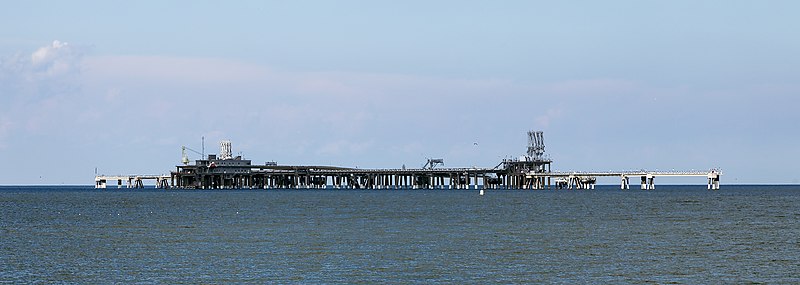
The liquefied natural gas loading pier at the Dominion Cove Point LNG facility, Maryland, USA
U.S. LNG has quickly become one of the hottest growth areas within global energy. Following Europe’s gas squeeze last year when Russia turned off most taps due to EU sanctions, U.S. LNG became an essential source for Europe.
This year, Europe is not experiencing an acute supply deficit yet; however, as winter draws nearer this may change and again place Europe into competition with Asian importers of LNG.
Presently, only seven LNG exporting projects exist in the U.S. but forecasts predict a significant expansion that would make America one of the leading exporters of this superchilled fuel.
At present, eight new LNG projects are under construction, with their combined annual production capacity reaching 86 million tons a year according to reports by Reuters earlier this week.
LNG Impact on Energy Security
The global Liquefied Natural Gas trade is growing rapidly, and this has a significant impact on energy security. It gives countries access to different natural gas sources while reducing their dependence on one source. This has benefited Europe directly.
When the Ukraine War began at the end of February 2022 it caused a panic about potential gas shortages. In October, LNG tankers began to line up at European terminals.
The worst of the current crisis may be behind us, but its effects will continue for many years, especially on the gas trade, the main markets that import and the dynamics of competition among the biggest exporters.

